

When modern designers ask themselves how to organize kitchen cabinets and drawers, they’re not talking about which drawer will contain cutlery or where you’ll store your InstantPot. In a well-designed kitchen, organization begins long before the first shelf insert or cutlery tray. It starts with the architecture. Modern designers treat kitchen storage as a sequence of purposeful zones that follow the natural flow of cooking. When the layout supports that rhythm, the space becomes easier to use and reduces visual noise. At NOLI, our approach begins with understanding where you cook, where you store, and what appliances are used where and when. Why? Because the right placement matters more than any accessory or design flourish.
Start With Workflow: Where Cooking Happens vs. Where Storage Lives
A functional kitchen organizes itself around movement. Drawers belong in the cooking zone, where utensils, spices, and smaller tools need to be reached without breaking stride. For example, pots and pans are best stored in drawers next to or under the cooktop because that is where they will be used.
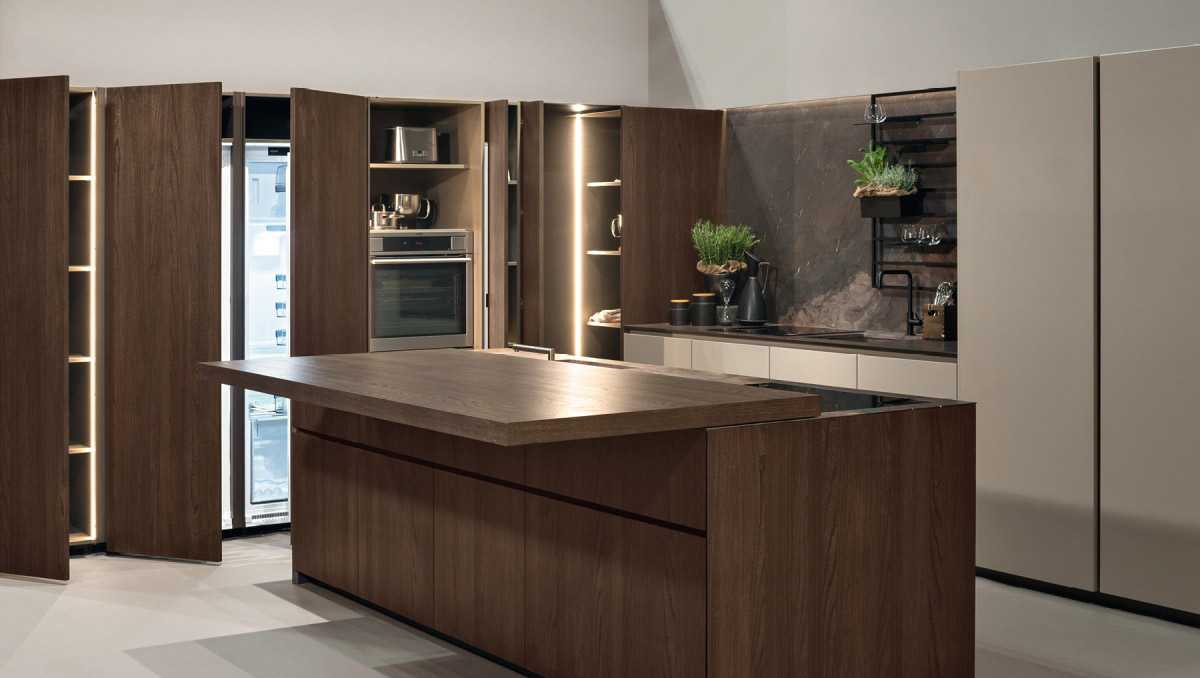
On the flip-side, cabinets belong where long-term storage lives. The most intuitive flow begins at the tall pantry cabinet beside refrigerated storage. This zone holds every room-temperature ingredient in one place and becomes the natural starting point when you enter the kitchen. A pull-out pantry makes the process even easier by bringing every item into full view, especially when paired with interior lighting.
From there, the flow moves to the sink base for cleaning and prep, then into the cooking area, where most of the drawers should be concentrated. Lightweight everyday items sit in the upper cabinets above, which can open with a simple hinge or a lift-up mechanism, depending on preference.
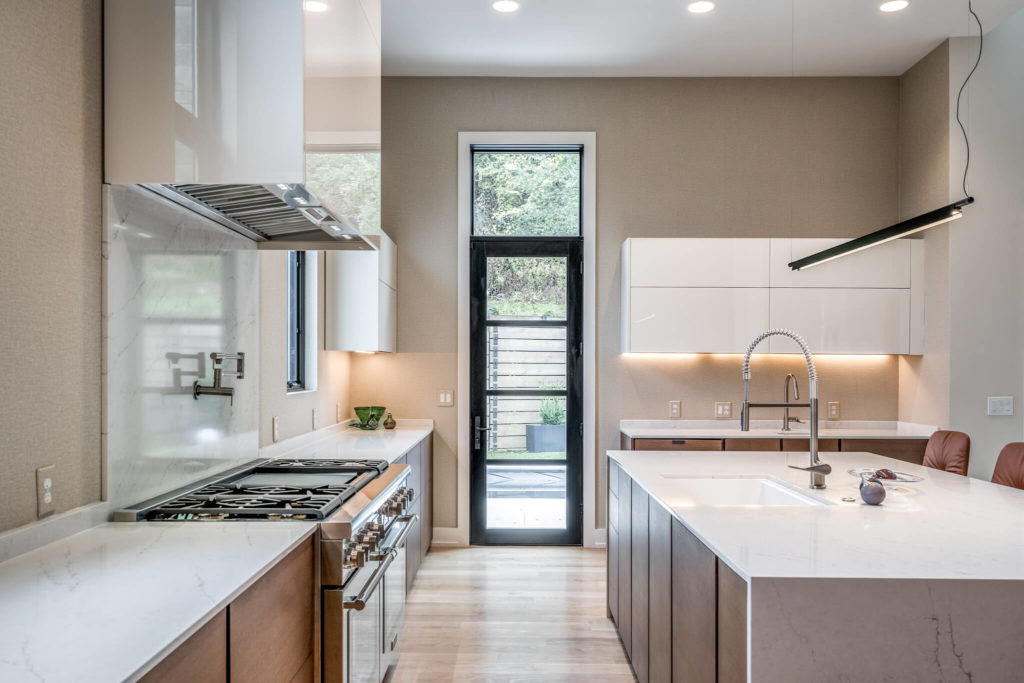
Lastly, undercabinet lighting creates visibility on the counter without interrupting the sightline. The island, if present, becomes an extension of the cooking area and is another ideal place for drawers.
Choose the Right Cabinet Types (Base, Wall, Tall) and When to Stack
Each cabinet type plays a specific role, so let’s break down each general cabinet type and where it belongs in your modern kitchen.
- Tall cabinets can hold internal drawers and deeper storage, and they set the vertical line for the kitchen. Aligning the height of upper cabinets with tall units creates a consistent horizon and keeps the space visually clean.
- Base cabinets are where all drawers live, including utensil drawers, spice drawers, pot and pan drawers, and serving storage for plates and cutlery. Because these items need different depths, the drawer stack should be intentional and directly tied to how you cook.
- Wall cabinets never contain drawers or pull-out trays, and their height should match the user’s reach. Whether or not to stack cabinets to the ceiling depends on the proportions of the room and the height of the person using the kitchen. Too much upper storage becomes clutter in the air. The goal is to create a functional vertical rhythm, not a wall of unreachable compartments.
No matter what cabinet type or combination of cabinet types you choose, slab fronts across all cabinets support a quiet, architectural feel by helping the entire storage system read as one continuous plane.
Drawers and Lighting: The Utility Core of a Well-Organized Kitchen
Drawers are the workhorse of the kitchen and should be designed with purpose and generally come in two varieties – deep, or shallow.
- Deep drawers hold pots, pans, and larger items.
- Shallow drawers store utensils, spices, and everyday tools. Inserts help divide each drawer by use case, whether for knives, prep tools, or baking essentials.
A word to the wise: avoid placing drawers directly beneath upper cabinets where clearance and seepage can become issues. The most useful drawers sit where cooking actually occurs.

Lighting is just as important as the storage itself. Drawer lighting brings visibility to lower compartments, especially in a mood-lit kitchen. Tall pull-outs benefit from vertical lighting that activates when the cabinet opens. Undercabinet lighting keeps the counter bright without introducing glare. When lighting follows function, every zone becomes intuitive and efficient.
The most successful layouts begin with how the cook moves, not how the kitchen looks. Aesthetic clarity comes from ergonomic clarity. When storage supports real behavior, the kitchen feels both modern and effortless.
For a layout tailored to your home and your cooking habits, contact NOLI or visit our Cincinnati showroom to design a kitchen with architectural precision.

