

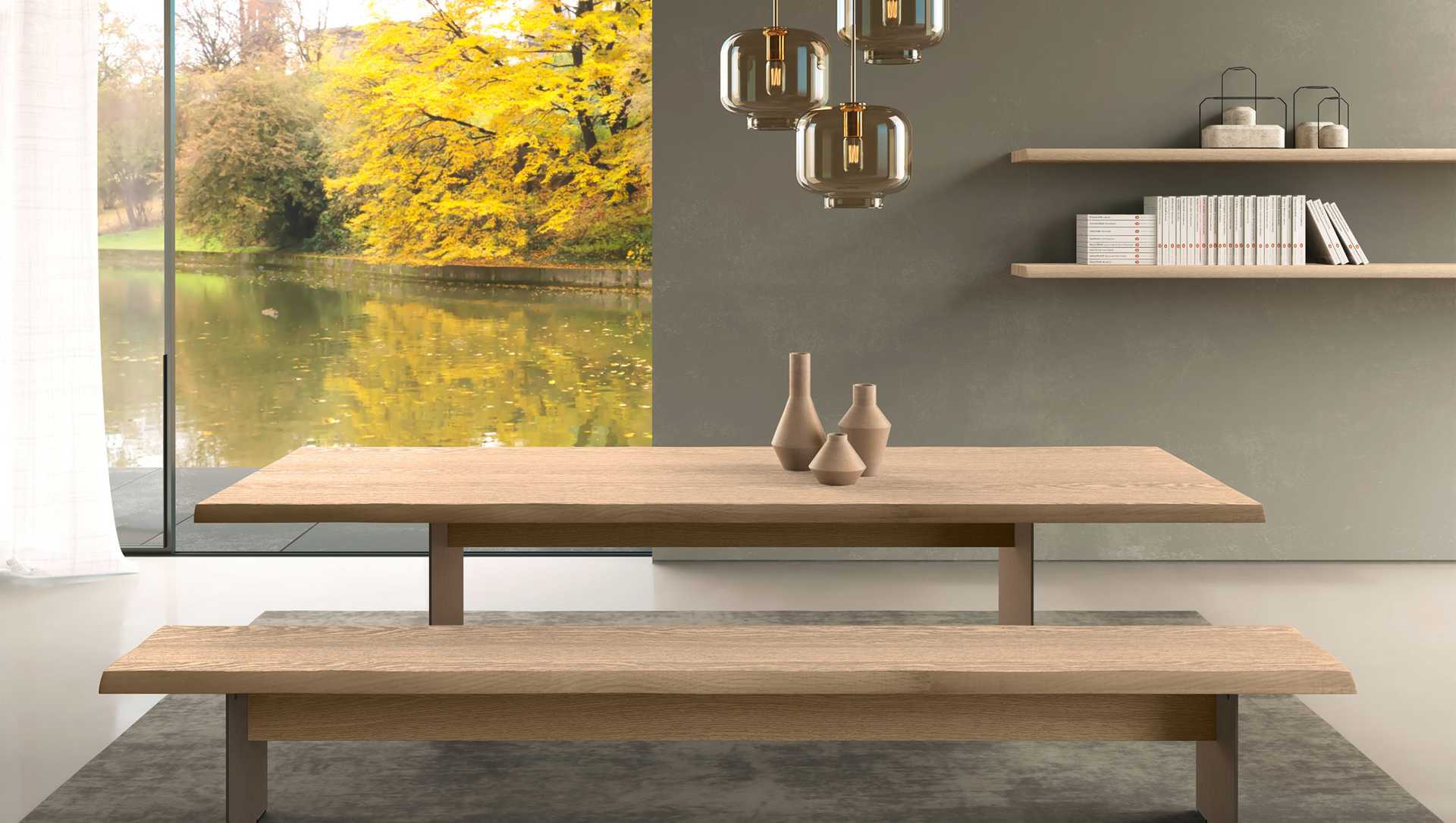
The expression “Made in Italy” calls to mind elegance and refinement. It speaks to a culture respected the world over, with a rich heritage in architecture, art, history, religion, cuisine, and fashion. When applied to products, “Made in Italy” attests to an inherently superior creation made of high-quality materials that have been designed and shaped with exquisite Italian craftsmanship.
But “Made in Italy” is about more than reputation alone. Italian design has long been defined by a delicate harmony between form and function—objects that are beautiful without sacrificing practicality. Materials are selected with care and reverence: natural woods, finely finished metals, stone, and glass that age gracefully and gain character over time. Color palettes tend toward the natural and enduring—warm earth tones, soft neutrals, and subtle contrasts that reflect the landscapes of Italy itself. In every detail, from the curve of a cabinet door to the weight of a handle in the hand, Italian design reveals a quiet philosophy: that everyday objects should enrich daily life through beauty, balance, and thoughtful craftsmanship.

While other countries have cheapened their brand ethos by expanding low-cost manufacturing practices, Italian industry has largely taken a different path. Made up primarily of small and medium-sized fabricators, the Italian design and manufacturing ecosystem continues to be rooted in family-run workshops, regional expertise, and generations of specialized knowledge. Artisans, carpenters, metalworkers, and fabricators are often connected to the same territories where their craft developed decades—or even centuries—ago.
The “Made in Italy” designation plays an important role in protecting that tradition. It certifies the authenticity of Italian production while safeguarding these artisans from imitation and counterfeiting. Rather than outsourcing the heart of their work abroad, many Italian manufacturers remain deeply committed to producing within Italy itself, preserving the integrity of both materials and craft.
Italian Fabricators We Love
MEET MAISTRI
The kitchen manufacturer Maistri offers a compelling example of this philosophy in action. Founded in 1946 by Silvio Maistri as a small artisan carpentry workshop in the Valpolicella region of northern Italy, the company began with the simple goal of helping rebuild Italian homes in the postwar years. Over time, that humble workshop evolved into a globally respected design brand while maintaining the core values of craftsmanship and precision that defined its beginnings. Even as the company expanded into advanced manufacturing, it preserved the sensibility of artisanal production—combining sophisticated technology with meticulous attention to detail. Today, Maistri kitchens are known for their refined aesthetics, natural materials, and customizable configurations that transform the kitchen into both a functional workspace and a social center of the home.

MEET OLIVIERI
Another illustration of this tradition can be found in Olivieri, a historic family furniture company whose roots date back to 1929. Founded by Gregorio Olivieri as a small woodworking laboratory, the company grew steadily through the vision and innovation of successive generations of the family. Over nearly a century, Olivieri has refined its craft while preserving the artisanal sensibility at its core. The company’s Olivieri Lab continues this legacy by producing custom furniture and architectural millwork that merges industrial precision with the care of traditional joinery. Designers and architects collaborate closely with the company to create bespoke furniture systems for homes, hotels, and residential projects around the world.

Together, companies like Maistri and Olivieri reflect a defining trait of Italian manufacturing: the seamless blending of heritage craftsmanship with contemporary design innovation. Their work demonstrates that “Made in Italy” is not merely a label of origin, but a living tradition sustained by generations of artisans who remain deeply connected to their materials, their craft, and their cultural heritage.
“Made in Italy” – The NOLI Way
For NOLI, “Made in Italy” is not simply a mark of origin—it is a design philosophy carried from generation to generation and translated into the way people live today.
For the past 10 years, NOLI has brought this legacy to the greater Cincinnati region, connecting homeowners with the same storied Italian fabricators whose histories stretch back 80, and in some cases nearly 100, years. Through long-standing partnerships with heritage manufacturers like Maistri and Olivieri, NOLI extends a lineage of craftsmanship that began in northern Italian workshops and now shapes some of the most refined homes in the United States.
This continuity between fabricator, designer, and a personal residence is central to NOLI’s mission: to bring modern Italian living to North America through spaces that unite architectural clarity, customization, and everyday functionality. Every kitchen, closet, and integrated wall system is approached as part of a larger vision for how a home should feel—elegant, intuitive, and deeply personal.
You can see this philosophy across NOLI’s portfolio. You can see it in the serene architectural scale of this North Bend kitchen:

As well as the warmth and refinement of this modern farmhouse we helped craft of a client in Coldstream, Ohio:
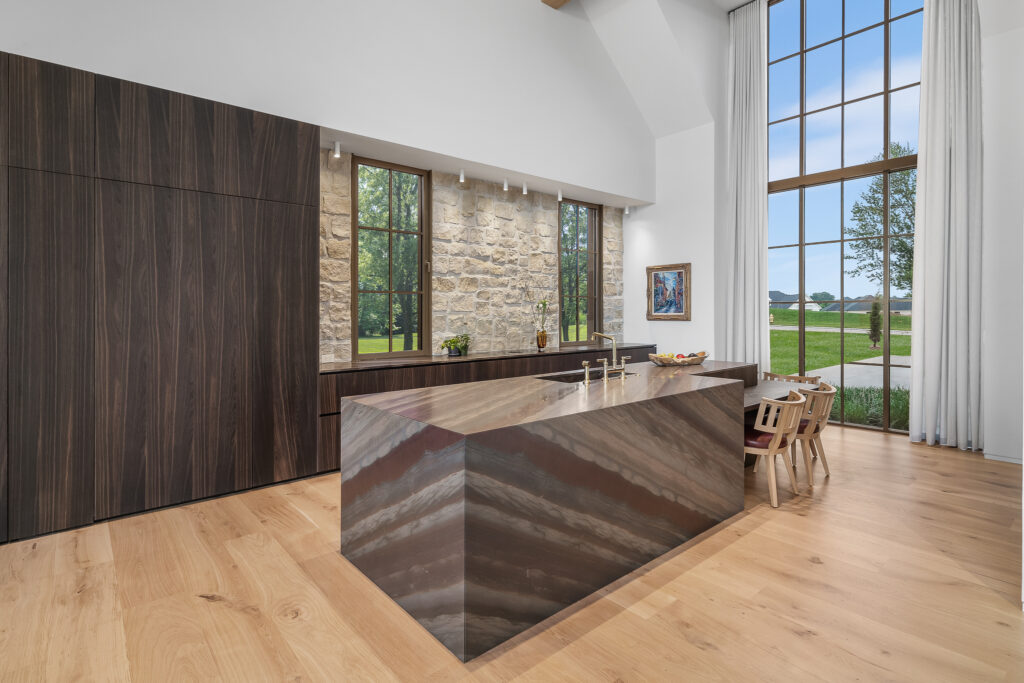
You can also see it in our full-home modern designs, like this vision we helped a client realize in Covington, Kentucky.

In each project, Italian fabrication heritage meets the specific needs of an American home, proving that timeless craftsmanship is most powerful when it is lived in. This is what “Made in Italy” means through the NOLI lens: not nostalgia, but continuity. A decade of design leadership in Cincinnati built upon nearly a century of fabrication expertise from Italy’s most respected makers.
To bring that story into your own home, explore NOLI’s portfolio, visit our Cincinnati showroom, or connect with the team to begin designing a space rooted in heritage, precision, and modern Italian living.

